Hidden runtime use
Dynamic libraries, vendor binaries, and actual protocol behavior can differ from the static picture.
The decision gap // 01
Dependencies, certificates, and configuration remain useful inputs, but they do not prove which crypto executes in a workload, who owns it, or whether it matters for the migration path.
Dynamic libraries, vendor binaries, and actual protocol behavior can differ from the static picture.
Without workload, owner, coverage, and network context, a crypto list does not tell a team what to change first.
Legacy systems and vendor dependencies can make immediate application remediation slow, risky, or unavailable.
The value
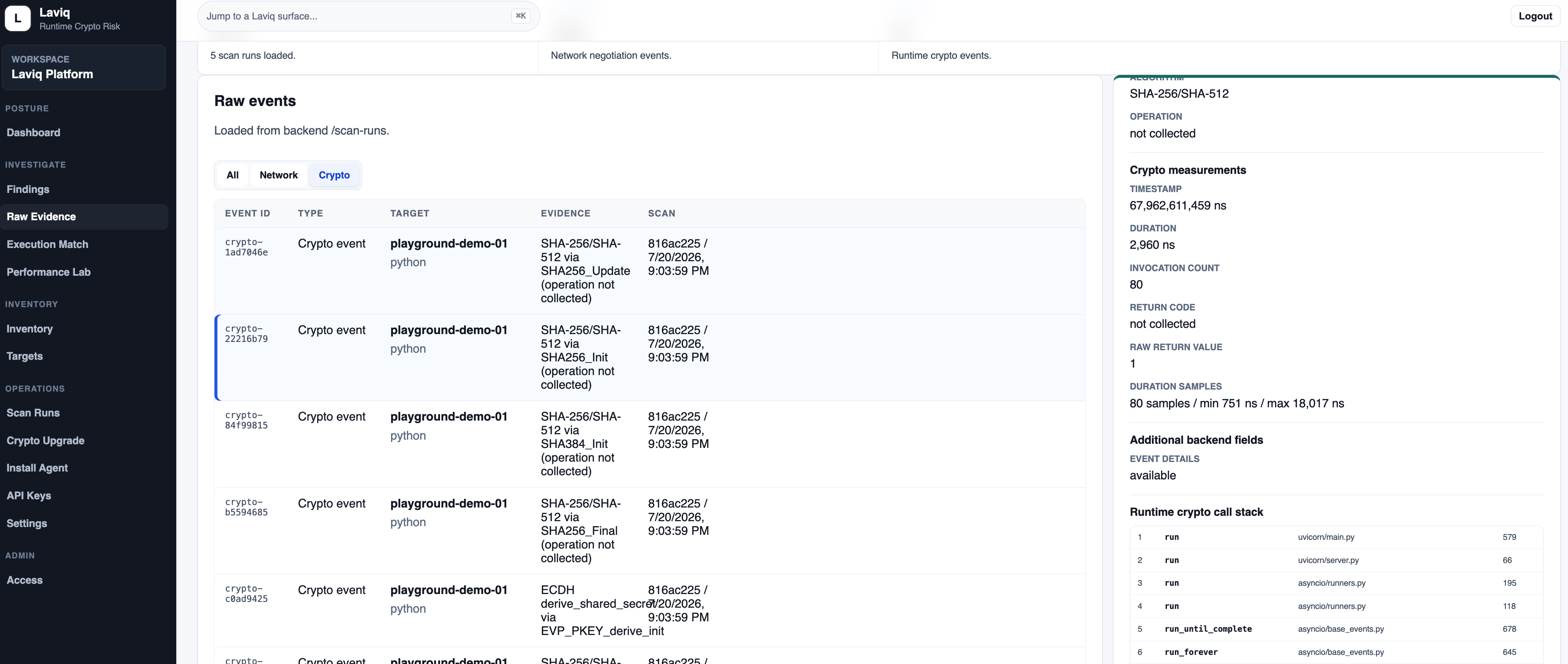
Laviq gives your team a reviewable view of the workload, the cryptography it used, and the limits of what was observed—so the next decision starts from proof.
Where to start // 02
Start with the workload where uncertainty, delay, or a wrong decision would be expensive.
Choose the question
Choose a critical service, a vendor-controlled component, or a path with material long-term exposure.
Start from active findings, coverage, ownership, and workload context rather than a dependency list that may not represent runtime use.
Use observed runtime evidence when source access is partial, unavailable, or insufficient for the question.
Bring an evidence-backed view of active behavior, open coverage gaps, owners, and next actions into the migration discussion.
Next step
Tell us about the Linux workload, vendor dependency, or migration decision you need to resolve. We will help define the right starting point.